Source Inflight Products Aircraft Boarding Stair for Airlines, Airports, and Ground Handling
Find 22 inflight products aircraft boarding stair units from verified Chinese manufacturers. Compare specifications for passenger transport, varying working heights, and customization options to suit small-scale or large-scale airline operations.
Key considerations
Products List


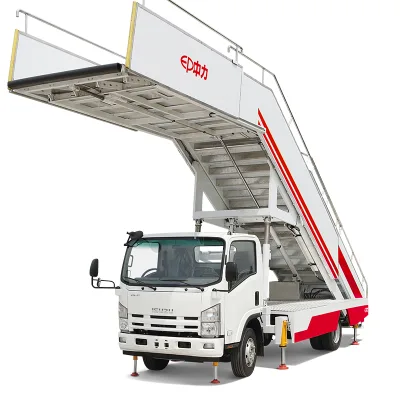
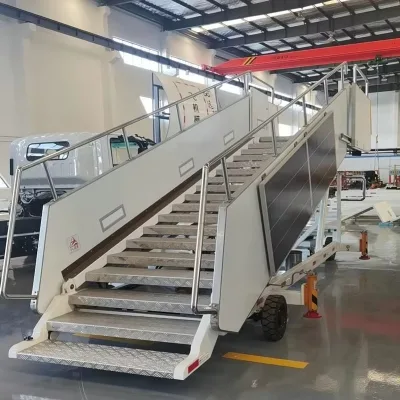
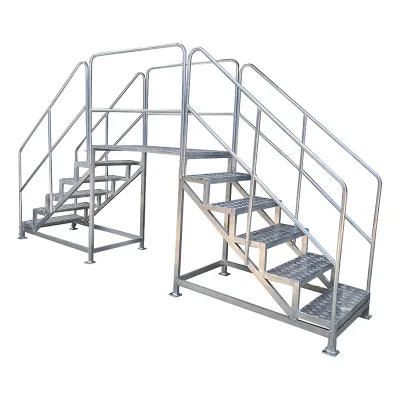

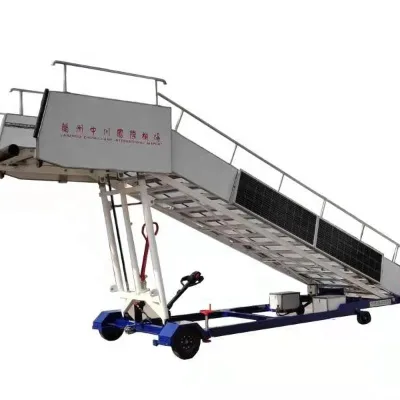
Comprehensive Sourcing Guide
Strategic Sourcing Guide for Inflight Aircraft Boarding Stairs
Understanding the Product Landscape and Technical Variants
The core keyword "inflight products aircraft boarding stair" encompasses a specialized category of ground support equipment (GSE) designed to facilitate the safe and efficient movement of passengers between the airport tarmac and the aircraft cabin. In the context of modern procurement, these units are not monolithic; they exist as distinct variants tailored to specific operational scales, aircraft types, and mobility requirements. The market presents a dichotomy between self-propelled units and towable or manually operated models, each serving different logistical needs within an airline's fleet.
Technical specifications vary significantly across the product spectrum. For instance, certain models are engineered as self-propelled aircraft passenger stairs, featuring a chassis that is factory-made to ensure structural integrity. These units often boast a working height range of 2000mm to 5800mm, allowing them to accommodate a wide variety of aircraft door heights. In contrast, towable passenger stairs are designed for manual or pulled movement, relying on a hand-push mechanism or a pedal-style hydraulic pump for light operation. These units typically feature a working height between 2050mm and 3600mm, with a specific focus on maneuverability in tight apron spaces.
The physical dimensions and load-bearing capacities are critical differentiators. A self-propelled unit may have an overall dimension of 8150mm by 2200mm by 3600mm, with a wheelbase of 3200mm and a curb weight of 8300kg. Such specifications suggest a robust build capable of supporting a maximum load-bearing capacity of 70 persons. Conversely, smaller towable models might be designed for 20 or 32 passengers, utilizing non-slip aluminum steps to ensure safety during boarding and deplaning. The material composition is another vital technical aspect, with many units constructed from a combination of steel and aluminum, or specifically Q235 steel, to balance durability with weight considerations.
Buyers must also evaluate the "Scale of The Airline" and "Category of Traffic" when selecting a model. Some units are optimized for small-scale operations or irregular working times, while others are built for large-scale, regular passenger transport environments. The flying range of the associated aircraft—whether internal or international—can influence the required durability and environmental resistance of the stair unit. Furthermore, the presence of an enclosed canopy as an option highlights the need for weather protection in specific climates, a feature that may be standard on some models and optional on others.
Compliance, Certification, and Regulatory Standards
In the aviation industry, compliance is not merely a suggestion but a prerequisite for operation. When sourcing aircraft boarding stairs, buyers must rigorously verify that the equipment meets international and regional safety standards. The supply chain for these products often originates from manufacturing hubs in China, including specific locations like Shanghai, where production standards are aligned with global expectations. However, the burden of verification lies with the buyer to ensure that the specific unit purchased carries the necessary certifications.
Several key standards are frequently referenced in the product specifications for this category. The International Air Transport Association (IATA) standards, specifically AHM 910, 913, and 915, are critical benchmarks for ground handling equipment. These documents outline the requirements for the design, construction, and testing of passenger stairs to ensure they can withstand the rigors of airport operations. Additionally, the ISO 14000 series, which relates to environmental management, and the ISO standard for general quality management, are often cited as production standards. Safety compliance is further reinforced by adherence to SAE-ARP836b, a standard specifically addressing safety requirements for aircraft ground support equipment.
It is essential for procurement teams to distinguish between "Customized" standards and established industry norms. While some products may be listed with a "Customized" standard, indicating a bespoke design for a specific airline's fleet, others adhere strictly to IATA, AHM, and ISO protocols. The "Production Standard" field in product data often lists a combination of these, such as "Iata, Ahm910, 913&915" or "ISO14000, IATA, AHM." Buyers should not assume that every listed product satisfies every standard; instead, they must request specific certification documentation for the exact model number, such as CM-KT, CM-TB, or GW-AE12, to confirm compliance.
The verification process should also include checking for the "Safety Standard" designation. For example, a specific requirement might be SAE-ARP836b, which governs the structural safety and operational limits of the equipment. Without explicit confirmation of these standards, the risk of non-compliance with airport authority regulations increases significantly. Furthermore, the "Condition" of the product is typically listed as "New," but buyers must ensure that new units are not merely refurbished items with a new label, as this can impact warranty and certification validity.
Cost Drivers and Pricing Dynamics
The pricing of aircraft boarding stairs is influenced by a complex interplay of factors, including the level of customization, the complexity of the mechanical systems, and the materials used in construction. The observed price range for these products spans from approximately $462 to $66,900, a variance that reflects the diversity of the market. This wide range suggests that the lowest-priced items may be basic, manually operated towable stairs with minimal features, while the higher-priced units likely represent complex, self-propelled systems with advanced hydraulic mechanisms, enclosed canopies, and high load-bearing capacities.
Several specific cost drivers must be considered during the budgeting phase. First, the "Type" of the unit plays a significant role. Self-propelled aircraft passenger stairs, which include integrated chassis and hydraulic systems, command a premium over towable models that rely on external towing vehicles or manual effort. The inclusion of an "Enclosed Canopy" as an option adds to the cost, as it requires additional materials and engineering to ensure weatherproofing and structural stability. Similarly, the "Working Height" range impacts pricing; units capable of reaching 5800mm require more robust lifting mechanisms and longer, reinforced steps compared to those limited to 3600mm.
Material selection is another critical determinant of cost. Units constructed from a combination of steel and aluminum offer a balance of strength and weight, but the specific grade of steel, such as Q235, and the quality of the aluminum alloy used for non-slip steps can vary. Higher-grade materials that offer better corrosion resistance or fatigue life will increase the unit price. Additionally, the "Packing" method influences the final landed cost. "Standard Export Packing" is generally more expensive than "Bare Packing" due to the additional materials and labor required to protect the equipment during long-distance shipping, especially when the origin is in China and the destination is international.
The "Minimum Order Quantity" (MOQ) also affects the unit economics. The observed MOQ range of 1 to 10 units suggests that buyers can source single units for pilot programs or small fleets, but larger orders may benefit from volume discounts. However, the "Customization" attribute indicates that bespoke orders, such as those requiring specific dimensions or branding, may carry a premium or require a higher MOQ to justify the tooling and engineering costs. Buyers should also consider the "Working time" of the equipment; units designed for "Regular" operation in high-volume environments may have higher upfront costs but offer better long-term value through reduced maintenance and higher durability compared to those designed for "Irregular" use.
Typical Applications and Operational Scenarios
The application of aircraft boarding stairs is highly dependent on the operational profile of the airline and the specific airport environment. The "Category of Traffic" being "Passenger Transport" defines the primary use case, but the scale and frequency of operations dictate the choice of equipment. For "Small-scale" airlines or regional carriers, towable passenger stairs are often the preferred solution. These units, which can handle 20 to 32 passengers, are cost-effective and easy to deploy in airports with limited infrastructure or where aircraft parking positions are not fixed. Their "Manual or Pulled" nature allows for flexibility in scenarios where self-propelled units might be too large or expensive to justify.
In contrast, "Large-scale" airlines operating "International" or "Regular" passenger transport routes often require self-propelled aircraft passenger stairs. These units are designed for high-volume throughput and can accommodate larger aircraft with higher door heights. The ability to operate independently of a towing vehicle reduces turnaround time, a critical metric for major carriers. The "Working Height" of 2000mm to 5800mm allows these units to serve a wide range of aircraft types, from narrow-body jets like the A320 and B737 to larger wide-body aircraft. The "Suitable" designation for specific aircraft models like the A320 and B737 highlights the importance of matching the stair unit to the fleet composition to ensure efficient boarding processes.
The "Flying Range" of the aircraft also influences the choice of boarding stairs. Units designed for "Internal" flights may have different requirements compared to those for "International" flights, where exposure to diverse weather conditions and longer ground times necessitate more durable equipment. The "Enclosed Canopy" option becomes particularly relevant in international operations where passengers may be exposed to rain, snow, or extreme heat during the boarding process. This feature enhances passenger comfort and safety, making it a valuable addition for airlines prioritizing the passenger experience.
Furthermore, the "Working time" attribute indicates the intended usage pattern. Units designed for "Regular" operation are built for continuous, high-frequency use, featuring reinforced components to withstand the wear and tear of daily operations. Conversely, units for "Irregular" working times may be designed for occasional use, such as for charter flights or emergency situations, where durability is less critical than cost-effectiveness. Understanding these operational scenarios is essential for buyers to select equipment that aligns with their specific logistical needs and service level agreements.
Supplier Evaluation and Quality Assurance Protocols
Evaluating suppliers for aircraft boarding stairs requires a multi-faceted approach that goes beyond simple price comparisons. Buyers must assess the supplier's ability to deliver products that meet the rigorous demands of the aviation industry. The "Product Origin" is a key factor, with many manufacturers based in China, including specific hubs like Shanghai. While this location offers competitive pricing and manufacturing capacity, it also necessitates a thorough vetting process to ensure that the quality control measures are robust and aligned with international standards.
Quality assurance should be a central component of the supplier evaluation process. Buyers should request detailed information on the "Production Standard" and "Safety Standard" compliance for each unit. The presence of certifications such as IATA, AHM, and ISO should be verified through documentation, not just marketing claims. Suppliers should be able to provide test results and quality control reports that demonstrate the structural integrity of the chassis, the durability of the steps, and the reliability of the hydraulic systems. The "Condition" of the product being "New" is a baseline, but buyers must ensure that the manufacturing process includes rigorous inspection at every stage.
The "Customization" capability of the supplier is another critical evaluation criterion. Many buyers require bespoke solutions tailored to their specific fleet or operational needs. A supplier's ability to offer "Customized Design" options, such as specific dimensions, materials, or features like an enclosed canopy, indicates a higher level of engineering expertise. However, buyers must be cautious of suppliers who claim customization without the necessary technical capacity. The "Standard" field in product listings often indicates whether a product is off-the-shelf or custom-made, and this distinction should be clarified during negotiations.
Packaging and logistics are also part of the quality assurance process. The "Product Packing" method, whether "Standard Export Packing" or "Bare Packing," must be sufficient to protect the equipment during transit. Buyers should verify that the packaging includes necessary documentation, such as operation manuals, maintenance guides, and certification certificates. The "Lead Time" and "MOQ" should also be discussed to ensure that the supplier can meet the buyer's delivery schedule. While specific lead times are not provided in the general data, buyers should expect that customized orders may require longer lead times than standard models.
Long-Term Procurement and Lifecycle Management
Procuring aircraft boarding stairs is a long-term investment that requires careful consideration of the total cost of ownership (TCO). While the initial purchase price is a significant factor, the long-term costs associated with maintenance, repairs, and operational efficiency must also be evaluated. The "Working time" and "Condition" of the equipment are indicators of its expected lifespan, but the actual durability will depend on the quality of materials and the frequency of use. Units designed for "Regular" operation in "Large-scale" environments will require more robust maintenance schedules than those used for "Irregular" tasks.
Lifecycle management also involves planning for the eventual replacement or upgrade of the equipment. The "Scale of The Airline" and the "Flying Range" of the aircraft fleet may change over time, necessitating adjustments to the ground support equipment. Buyers should consider the modularity and adaptability of the units they purchase. For example, a self-propelled unit with a "Working Height" of 2000mm to 5800mm may offer more flexibility than a fixed-height towable unit, allowing the airline to adapt to future aircraft acquisitions without immediate replacement.
Maintenance and support are critical components of long-term procurement. Buyers should inquire about the availability of spare parts, such as non-slip aluminum steps, hydraulic pumps, and chassis components. The "Material" composition, such as Q235 steel or a steel-aluminum mix, should be compatible with local maintenance capabilities. Suppliers that offer comprehensive after-sales support, including training for ground staff and regular maintenance checks, can significantly reduce downtime and extend the useful life of the equipment.
Finally, buyers should consider the environmental impact of their procurement decisions. The "Production Standard" often includes references to ISO 14000, which relates to environmental management. Selecting suppliers who adhere to these standards can help airlines meet their sustainability goals. Additionally, the "Packing" method should be evaluated for its environmental footprint, with a preference for recyclable or reusable packaging materials. By taking a holistic approach to procurement, airlines can ensure that their boarding stair fleet remains efficient, safe, and compliant throughout its lifecycle.
FAQs
What customization options are available for these aircraft boarding stairs?
Customized design is available for these units, allowing buyers to tailor specifications to specific needs. Some models feature enclosed canopies as an optional upgrade. Production standards can also be customized beyond standard industry norms to meet unique operational requirements.
Which standards do these inflight products aircraft boarding stair units meet?
Units often comply with IATA, AHM 910, 913, and 915 standards alongside ISO certifications. Safety compliance may also adhere to SAE-ARP836b for structural integrity. Buyers should verify specific model certifications, as some products list customized standards rather than fixed industry norms.
How does the working height range vary across different stair models?
Working heights typically range from 2000mm to 5800mm for self-propelled units and 2050mm to 3600mm for towable models. This variation allows the equipment to accommodate various aircraft door heights. Specific models like GW-AE12 offer distinct height capabilities within these ranges.
Can these stairs be used for both small and large-scale airlines?
Yes, products are available for both small-scale irregular operations and large-scale regular passenger transport. Some units handle up to 70 persons while others serve 20 to 32 passengers. The scale of the airline dictates the choice between manual towable and self-propelled configurations.
What materials are used to construct these aircraft boarding stair units?
Construction typically utilizes a combination of steel and aluminum or specifically Q235 steel for durability. Steps are often made of non-slip aluminum to ensure passenger safety. The chassis is factory-made to maintain structural integrity during regular or irregular working times.
Which aircraft models are suitable for these boarding stair products?
These units are suitable for common aircraft types such as the A320 and B737. The working height and ground clearance are designed to match the door levels of these specific models. Buyers should confirm compatibility with their specific fleet composition before procurement.
What is the typical packaging method for exporting these products from China?
Products are shipped using standard export packing or bare packing methods depending on the model. Origin locations include China and specifically Shanghai. The packaging choice affects the final landed cost and protection level during international transit.